Future Catalyst Award 2024 - STEM Best Practice Innovation Exhibition
The Problem
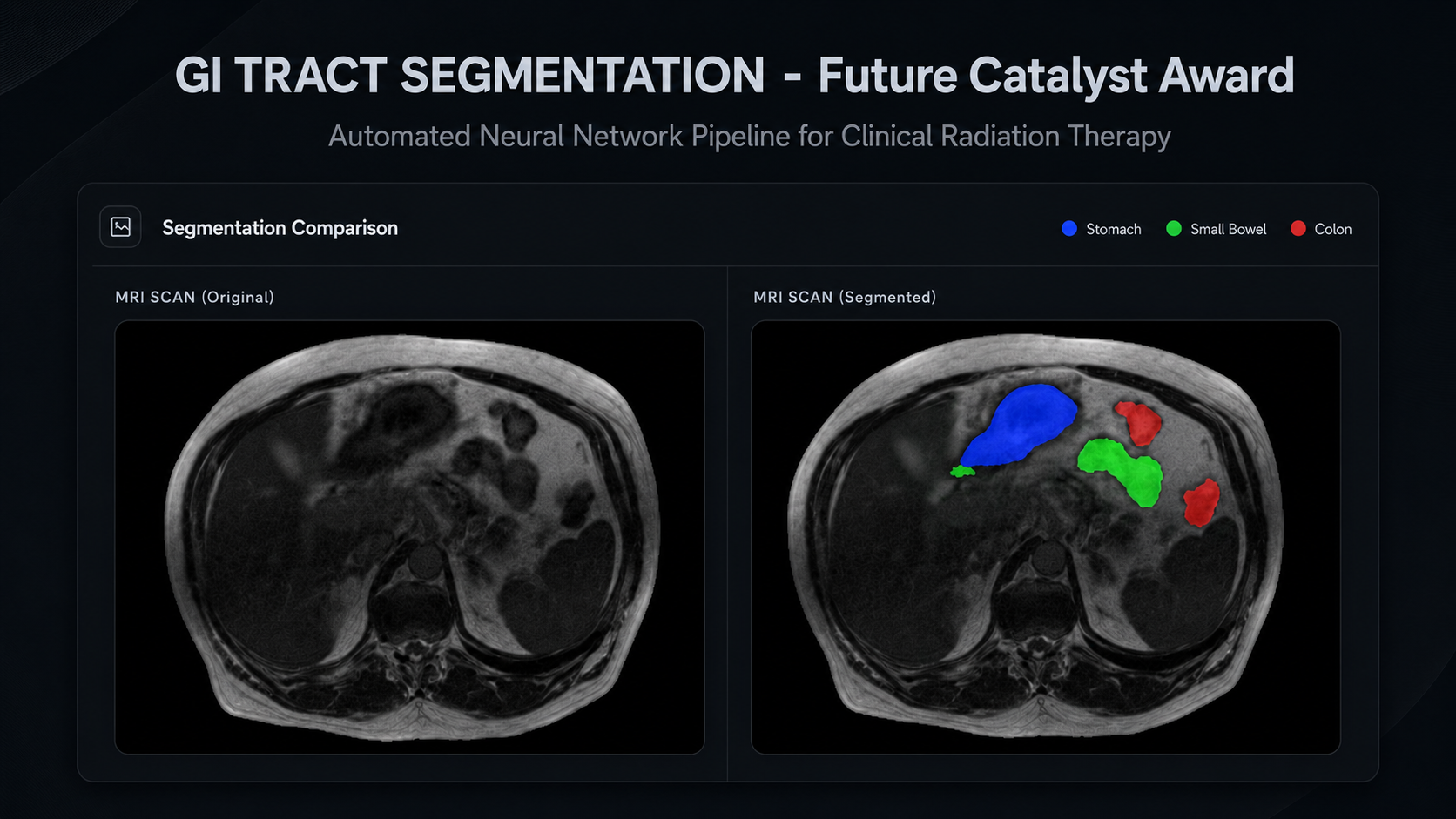
In 2019, an estimated 5 million people were diagnosed with gastrointestinal (GI) tract cancer worldwide. About half of these patients are eligible for radiation therapy, a critical treatment that requires oncologists to manually outline the exact position of the stomach and intestines on each daily MRI scan. This precision is vital so that the radiation beam can target the tumor while sparing healthy surrounding tissue.
Without automation, this manual segmentation process extends a 15-minute treatment session to over an hour. This severe delay creates a massive burden that is difficult for cancer patients to tolerate, significantly limits daily clinic capacity, and restricts how many people can receive life-saving care.
The Solution & Impact
To solve this clinical bottleneck, I developed an AI-powered automated semantic segmentation pipeline. By training deep learning models to identify and delineate the GI tract automatically, this project aims to cut down the planning time back to a standard 15-minute window.
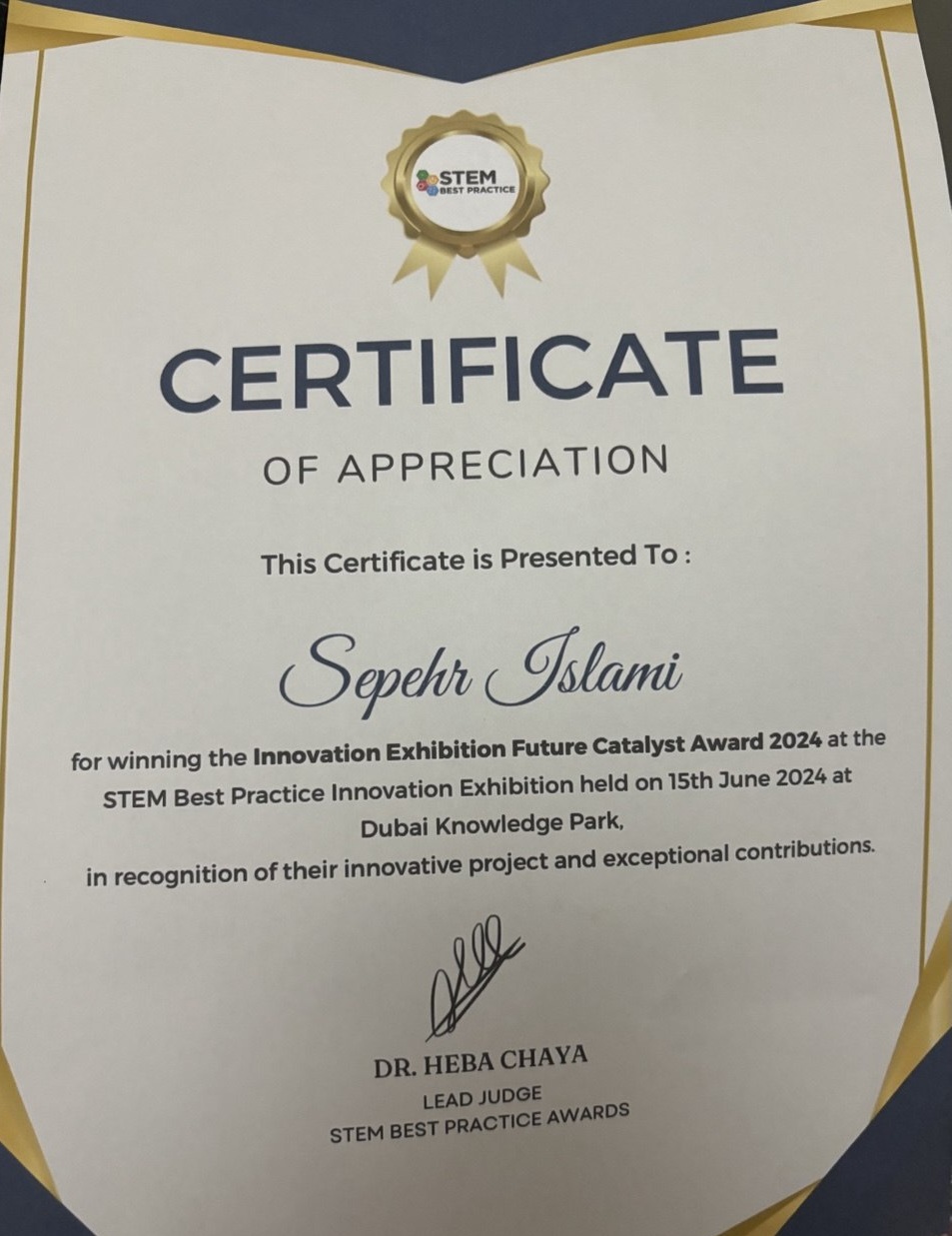
The real-world impact of this solution, which enhance patient comfort and allowing oncology departments to treat more patients efficiently, led to this project being honored with the Future Catalyst Award 2024 at the STEM Best Practice Innovation Exhibition.
👉 Looking for the full technical breakdown, neural network architecture, and dataset details? View the Full Project Specifications & Source Code →
Official Validation & Media
Below are the official verifications and highlights from the exhibition and award ceremony at Dubai Knowledge Park:
Official Exhibition Presentation & Award Ceremony
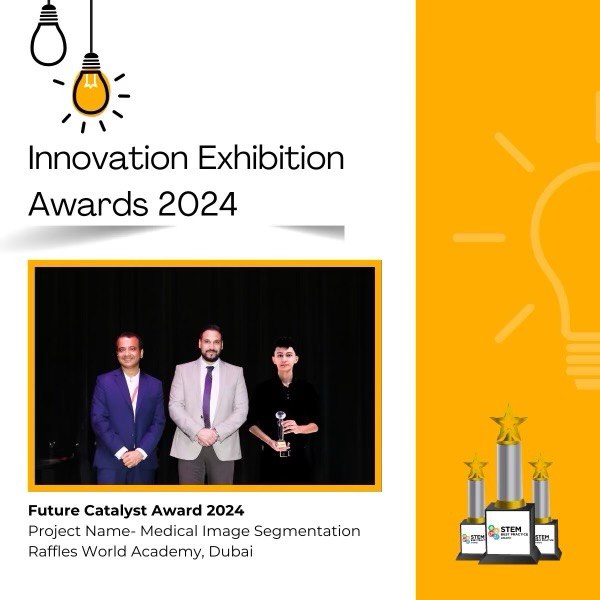

Left: Award ceremony at Dubai Knowledge Park - receiving the Future Catalyst Award 2024. Right: Official winner announcement featured by Raffles World Academy, celebrating the impact of this AI healthcare application.
The official award certificate signed by the Lead Judge, Dr. Heba Chaya , confirming the first-place track validation